AI can save time, improve work and open up new possibilities. It can also get things wrong. This practical, non-technical training helps teams understand the risks, apply human judgement and use simple guardrails to make better decisions when working with AI. It is designed for business teams who are already using AI, or preparing to.
Responsible AI use is not about stopping people from using AI, or creating unnecessary fear around it. It is about helping people use it well, with enough understanding to make sound decisions.
AI can produce incorrect or misleading information.
People remain responsible for how AI output is used.
Good judgement means knowing when to trust, check, challenge or stop.
Six areas come up most often when teams start using AI in everyday work. The training takes each one in turn, using plain language and realistic examples rather than theory.
AI can produce confident answers that are simply wrong. We look at hallucinations, checking evidence, and knowing when human review is essential before acting on an output.
Sensitive information, personal data and confidential business information all need care. We help teams judge what is appropriate to enter into an AI tool, and what is not.
AI-supported decisions can affect groups differently. We look at who could be disadvantaged, and how to check for outcomes that are unfair or inconsistent.
Generated text and imagery raise real questions about source material, ownership and reuse. We build awareness of the considerations, and the need for human checking before publication.
A named human stays responsible. We look at being able to explain how AI contributed, knowing when that use should be disclosed, and why "the AI said so" is never enough on its own.
AI changes tasks, skills and workloads. We consider wellbeing, appropriate automation, and where AI use sits alongside wider environmental and sustainability questions.
The aim is not to slow teams down. It is to help them recognise where AI can go wrong, so they can use it with more confidence, not less. Safe use sits alongside the wider AI training available to business teams.
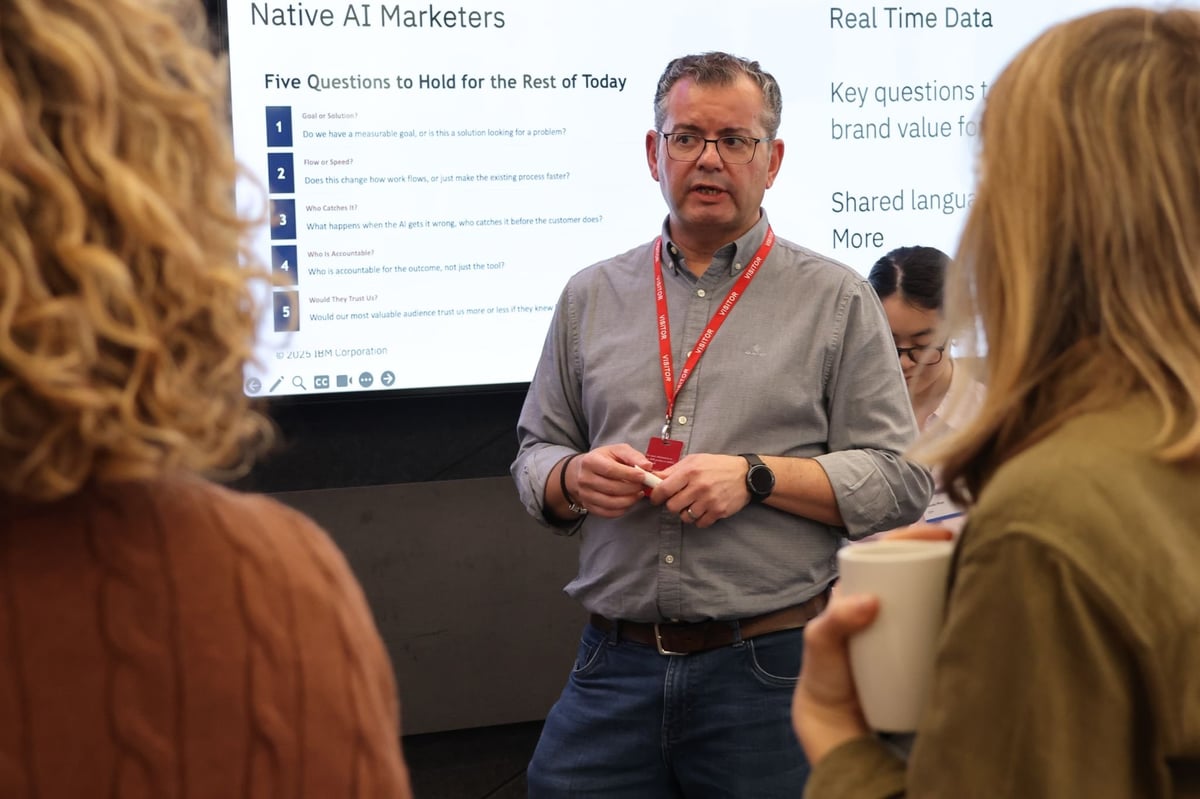
These five questions give teams a simple way to pause and think before AI output becomes a decision, a communication or an action. They are deliberately plain, and designed to be used in the moment rather than remembered from a policy document.
Who could this disadvantage, and how would we know?
Who is responsible, and can they intervene?
Could we explain what happened in plain English?
What happens if the AI gets it wrong?
Can someone question the outcome and get it put right?
Five questions, asked early, are often enough to change a decision for the better.
Statements like "we will use AI responsibly" sound sensible and most teams mean them, but they do not tell anyone what to do when an AI tool produces something that looks convincing. This training helps teams turn broad principles into guidance that is specific enough to guide real behaviour.
"Use AI responsibly."
"Do not enter confidential information into public AI tools, and ensure customer-facing AI output is checked by a named person before use."
Useful guardrails tend to share four characteristics.
It says what to do in a real situation, not just the principle behind it.
It names who is responsible, rather than leaving it to whoever happens to be closest.
It is clear what needs reviewing before an output is used.
It is honest about what AI should not be used for.
Good guardrails help people make real decisions. They should explain what is allowed, where the limits are, who is responsible and what needs checking.
The session uses real or realistic workplace situations to help teams think through responsible AI use. Content can be tailored to your organisation, your audience and the AI tools your team actually uses.
Sessions can focus on the platforms your team already uses. The techniques covered transfer across tools.
The training can be adapted for different levels of responsibility, and delivered to mixed groups where that suits you better.
How to use AI safely in everyday work, and know when to stop, check or escalate.
How to create clearer team expectations, ownership and practical safe-use guidance.
How to think about organisational principles, accountability, appropriate limits and responsible adoption.
Safe and responsible AI use can be delivered as a focused standalone session, or incorporated into a broader AI training programme. Sessions run online or in person, whichever suits your team.
A focused skill-building session covering safe and responsible AI use in everyday work.
Included as a module within a half-day AI workshop, alongside practical application and hands-on exercises.
Built into the wider full-day AI training, which also covers hallucinations, copyright and sustainability.
Formats and pricing are set out in full on our AI Business Training page, so everything stays in one place and up to date.
View Training Formats and PricingAs AI moves from experimentation into everyday workflows, teams need both capability and practical guardrails. One without the other tends not to last.
Responsible adoption means knowing where AI genuinely helps, while retaining human judgement, accountability and appropriate oversight. Where you want to take that further, our AI implementation support covers planning and embedding AI into everyday ways of working.
Common questions from teams considering safe and responsible AI training
Let's talk about what your team needs. We'll shape a session around your organisation, your audience and the tools you use.